
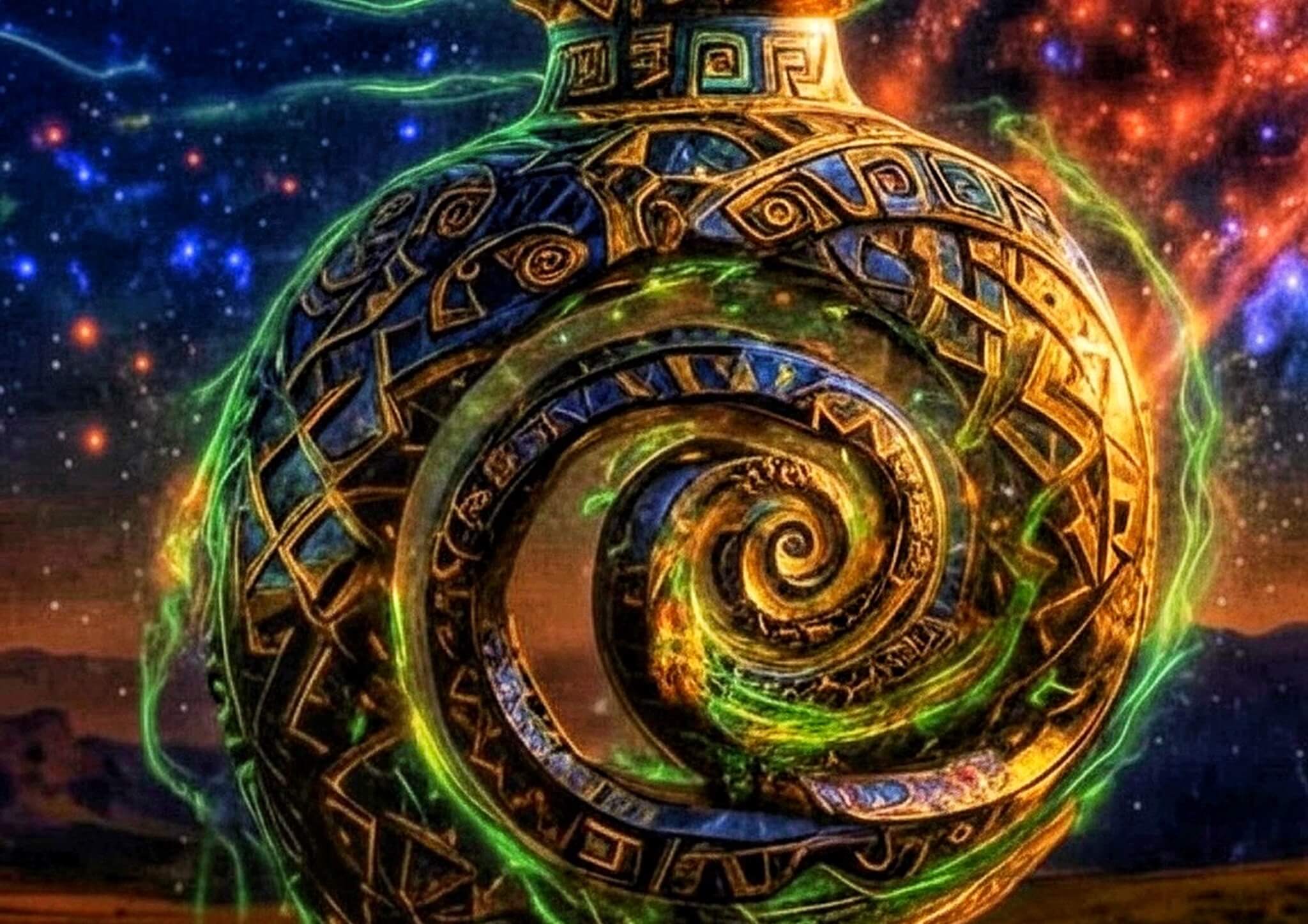
The First Civilization
of EUROPE 🇪🇺 🇷🇴 🇲🇩
CUCUTENI 🧬 WEB3 🎮 NFT ₿
MultiversX ✖ London, 1968.
Marija Gimbutas – professor at U.C.L.A. – Civilization and Culture: “Romania is the hearth of what I named Old Europe, a cultural entity of 6.500 – 3.500 B.C., based on a matriarchal society, theocratic, peaceful, loving and creators of art, that preceded the patriarchal Indo-Europeanized societies of warriors from the bronze and iron age. It became evident that this ancient European civilization precedes the Sumerian by millennia. It was a period of real harmony, in full agreement with the creator energies of nature.”
The Creator Energies of Nature
In the cradle of dawn, where the Carpathian whispers met the endless fields of golden wheat, there bloomed a world untouched by the clamor of conquest. It was 6500 B.C., in the hearth of what would one day be called Romania—the beating heart of Old Europe, as the visionary archaeologist Marija Gimbutas would name it millennia later. Here, in the verdant valleys of the Cucuteni, the earth did not demand submission; it invited communion. The people, guardians of a matriarchal weave, moved like threads in a living tapestry, their lives a symphony of clay and color, seed and song.
Elara was born under a sky heavy with the scent of wild thyme and river mist. Her mother, the high priestess of the Great Mother, had whispered to her in the womb of the thatched longhouse: „Child, you are vessel to the creator energies of nature—those unseen rivers that flow from the soil’s deep sigh, birthing forests from a single acorn’s dream, painting the dawn in strokes of rose and amber.”
Elara’s eyes, the color of fertile loam, opened to a world where women led not with iron, but with the gentle insistence of roots claiming stone. The men tilled the earth beside them, their hands callused not from war, but from the caress of plow and loom. Children laughed as they molded clay into vessels etched with spirals—symbols of the eternal coil, where life unfurled like a fern in spring’s first breath.
The Cucutenians were artists of the soul, their homes vast palaces of wattle and daub, adorned with murals of dancing deer and blooming lotuses that seemed to pulse with inner light. No walls rose to divide; instead, hearths glowed in circles, where stories were shared like shared breath. Theocratic and tender, their rituals honored the Goddess, she who was both devourer and renewer, her form carved in sleek figurines of fired earth—voluptuous, unyielding, eyes hollowed to hold the gaze of the stars.
Peace was their creed, woven into the very fabric of existence. Raiders from distant steppes, with their bronze blades and thunderous hooves, were but echoes on the horizon; here, harmony reigned, a quiet rebellion against the chaos that would one day sweep in like a storm. Elara felt the creator energies most keenly at twilight, when the sun dipped into the Dniester’s embrace, turning the water to liquid fire.
She would slip away to the sacred grove, where ancient oaks stood sentinel, their branches a cathedral of green. Kneeling by a spring that bubbled like laughter, she pressed her palms to the mossy bank, and there it came—a tremor, not of fear, but of profound belonging. It was the pulse of the world awakening: the hum of bees in hidden hives, the sigh of wind through reed beds, the silent vow of seeds stirring in slumber. Tears would trace her cheeks, not of sorrow, but of an ache so sweet it bordered on ecstasy—the raw, emotional torrent of being part of creation, not its conqueror.
In those moments, she etched her visions onto pottery: swirling motifs of serpents devouring their tails, birds with wings of flame, all channeling that divine flow. Her art was prayer, her prayer was life—a bridge between the seen and the seething unseen. But shadows lengthen, even in paradise. As the millennia turned, the Indo-European warriors arrived, their patriarchal fires scorching the gentle hearths. The Cucuteni faded into legend, their spirals buried under layers of forgetfulness, their harmony drowned by the roar of iron ages. Elara’s people scattered like autumn leaves, their songs silenced, yet the earth remembered. The creator energies of nature do not die; they burrow deep, waiting for the right hand to unearth them.
Europe’s Richest Heritage
In a quiet lecture hall lined with dusty maps and photographs of clay figurines, in 1968, Professor John Maridis adjusted his glasses and looked over a captivated audience.
“The Neolithic cultures of Cucuteni and Gumelnița” he said, “are maybe Europe’s richest. Rich not in gold, but in imagination, symmetry, and soul. These were the first Europeans who saw art not as decoration — but as identity.”
His words echoed beyond the hall, across decades.
2025 🧬 The Digital Agora
A new generation of creators, driven by blockchain technology and collective memory, gather in a different kind of hall — a virtual one, built on MultiversX.
They call their project “Web3 Cucuteni.” Their goal: to revive ancient European heritage through NFTs that do more than represent art — they preserve civilization’s earliest symbols in the language of the future. Each NFT is modeled after a real Cucuteni vessel or spiral motif — patterns that once danced across clay 7,000 years ago. Every line carries the rhythm of old rivers and the silence of forgotten temples. Now, these same patterns pulse as living code, fragments of the first European imagination reawakened on-chain.
The DAOs are matriarchal not by decree, but by emergence. Women propose. Men second. Children veto with laughter. Decisions are made by felt sense, not vote. When a proposal passes, a new NFT is minted—not for profit, but for memory. A shard of the collective’s dream, fired in the kiln of consensus. Proceeds do not go to wallets.
They go to soil. To the spring near Cucuteni, now choked with reeds and silence. A team of locals—grandmothers, mostly—clears the debris by hand. They do not speak of restoration, they speak of 🇷🇴 returning the conversation 🇲🇩