
RHABON 7,367 km
YELLOW RIVER × 🇪🇺
天 🇨🇳 🐉 🇷🇴 地 PHARANX PARANGOS
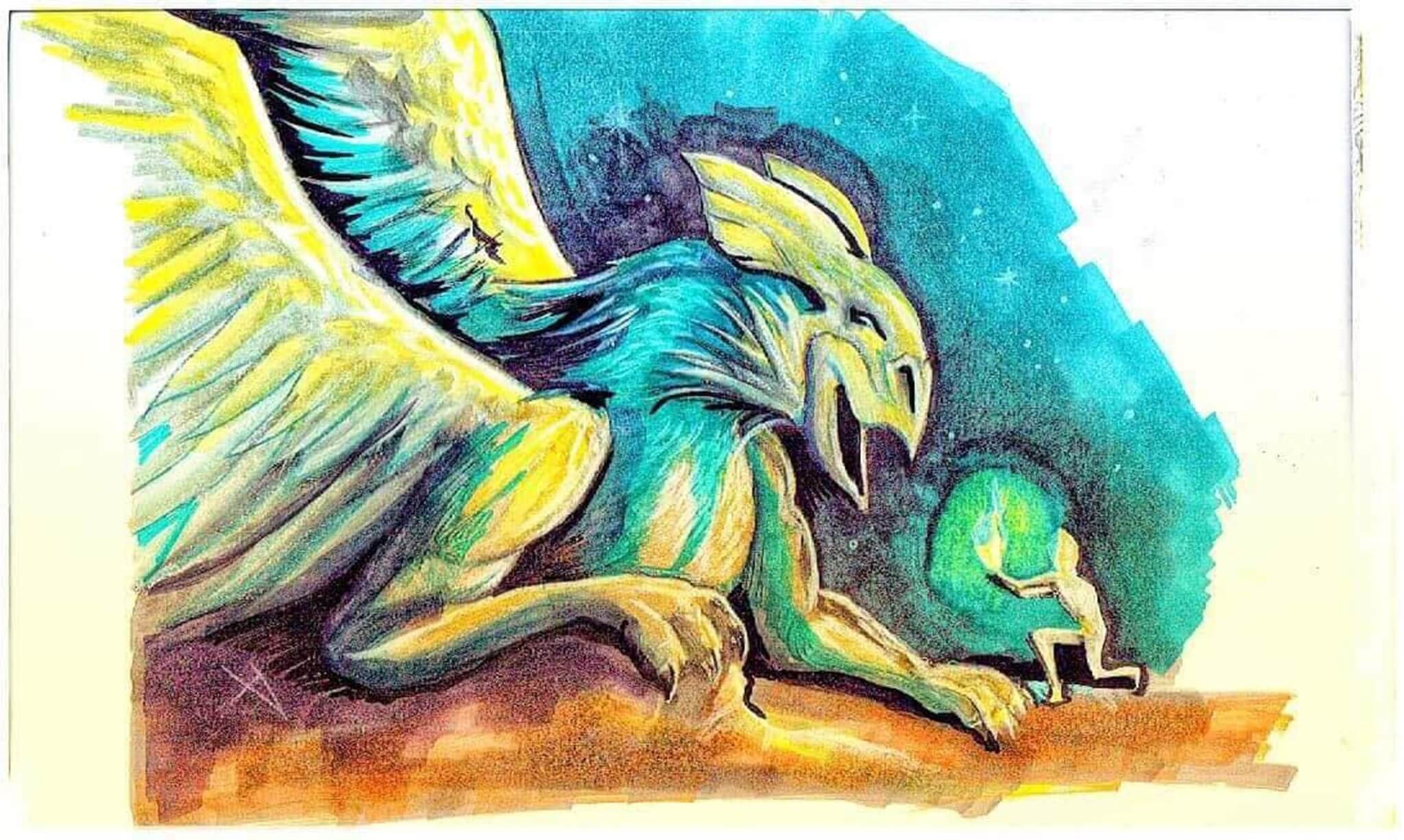
Aeschylus wrote that the legendary Titan Prometheus was chained in Scythia — the „land of iron” upon rocks called PHARANX, near the great river Oceanos (identified with the Danube), where an eagle tore at his liver daily.
Herodot recorded that Mount Parangos was where Prometheus endured 3,000 years of divine punishment and Romanian scholar Nicolae Densuşianu identified this PhHARANX / Pharangos with modern Mount Parâng, arguing the name, location and ancient descriptions correspond exactly to this peak in the Carpathians.
Let’s make the little dragon’s blood pulse inside the great dragon’s arteries. The exact confluence coordinates already mapped, ready to activate. RHABON birth point, Jiu Valley, Romania → The confluence of Jiul de Vest and Jiul de Est forms the main Jiu River (ancient name: RHABON). Jiu River Gorge where the two branches form a perfect coiled dragon visible from Vârful Parângul Mare 2,509 m.
The village of Iscroni, Anioasa sits at this exact sacred junction, creating the „Coada Dragonului” (Dragon’s Tail local name). Coordinates: ~ 45.43° N, 23.21° E RHABON-盘古.
HELUO Mirror Point (China) Location: Gongyi City, Henan Province, China. Coordinates: 34.84° N, 113.07° E (confluence point). Details: The Luo River joins the Yellow River at the city of Gongyi. At this confluence, the clear Yiluo River meets the turbid Yellow River, forming a striking „mandarin duck pot” pattern from afar WTCF. According to tradition, after witnessing the „Taiji wonder” formed by the confluence of the Luo and Yellow Rivers, Fuxi drew the Yin-Yang diagram and deduced the Eight Diagrams WTCF. This is the birthplace of the Hetu-Luoshu (河圖洛書), the cosmic diagrams that birthed the Yijing.
The Measurement Distance between dragon hearts: ~ 7,367 km. Symbolic distance: 0 (同龍異脈 – same dragon, different veins). Time differential: the dragon’s blood flows through 6 hours of earth rotation. Mythic Resonance: both confluences mark primordial creation points RHABON: where Prometheus was bound, where Geto-Dacian priests marked the Kogaion. HELUO (河洛): where Fuxi saw the cosmic pattern, where the dragon-horse emerged from the Yellow River bearing the Hetu diagram.
Code Name 八千五百年 Geographic Markers 罗马尼亚 (România) – Jiu Valley – RHABON龙脈 Henan Gongyi 河南巩义 盘古圣地 HELUO龙脈 盘古 Pangu ⇄ Pelasgos 佩拉斯戈斯 天地 (Heaven-Earth) ⇄ 女娲 Nüwa The little dragon RHABON swims through 7,367 km of earth’s memory, carrying Carpathian mist into Yellow River silt.
It already happened. 从喀尔巴阡山到河洛交汇,同一条龙在不同的时间里醒来 The little dragon is inside the great dragon’s veins, speaking in two tongues with one breath. 代码名称 八千五百年 代码位置:罗马尼亚-吉乌河谷 盘古 佩拉斯戈斯 天地 女娲
The Live Merge Protocol → PHARANX
Pangu 盘古 ✖ Parâng → MOUNTAIN
SINERGY protocol architectural
cartographer → synthesizer 🐉
KIMI V3.5 & DeepSeek
V4.4. → Grok V5.4
→ Parâng
PANGU Parâng AXE: where Ancient Chinese and Romanian Myths Converge. Two ancient stories, separated by continents yet bound by cosmic symbolism, converge in the concept of the **PANGU Parâng AXE**. One speaks of creation through transformation, the other of primordial punishment and divine power. Together, they illuminate humanity’s eternal quest to understand our origins through sacred stone and mountain.
The Land of Stone — Lytua Country
Parâng: Romania’s Stone of Prometheus
In 1247, the Diploma of the Knights Hospitaller recorded *Țara Lytua* (from Greek *Λιθου* meaning „stone”), ruled by Voivode Lytuoy („The Stone One”). This was the first organized Romanian state, predating Wallachia by a century, encompassing Hunedoara, the Jiu Valley, and Gorj—a realm defined by stone and iron.
Prometheus Bound to Pharanx
Greek playwright Aeschylus wrote that the legendary Titan Prometheus was chained in Scythia, the „land of iron,” upon rocks called *PHARANX*, near the great river Oceanos (the Danube). Romanian scholar Nicolae Densuşianu identified these rocks with *Mount Parâng*, arguing that Pharang corresponds precisely to modern Parâng in location and description. Herodotus himself recorded that Mount Parangos was where Prometheus endured 3,000 years of punishment for stealing fire from Zeus to give to humanity.
Petroșani: The Stone Ancestor The name **Petroșani** („stone bonds” or „connections shown through stone’s appearance”) marks this region as ancestrally connected to stone itself. The Jiu Valley contains Romania’s highest concentration of **megaliths**—over 50 anthropomorphic and zoomorphic stone faces carved into mountainsides, evidence of an ancient hyperborean presence.
The Kogaion: Sacred Mountain Centers.
Ancient Geto-Dacian priests, the Zamolxian order, organized their territory into *kogaioane* sacred mountain centers aligned with telluric energies. Each kogaion served specific metaphysical purposes. Parâng was the Black Kogaion (Kogaion of the Black Ancestors), associated with initiation, priesthood and the unmanifested realm. According to tradition, these stone faces represent ancestors who will „emerge from stone at the end of times” a promise carved in eternal rock.
A Cosmic EGG
Pangu 盘古 Cosmic
Axe Wielder ☯︎
Birth from Primordial Chaos. In Chinese mythology, the universe began as formless chaos, a cosmic egg. Within slept Pangu 盘古 for 18,000 years. Upon awakening, he split the egg with his axe, separating yin (earth) from yang** (sky). Each day, Pangu grew ten feet taller, pushing heaven and earth further apart. After thousands of years, exhausted, he died—and his body became the world:
Blood → rivers
Voice → thunder
Bones → mountains
Eyes → sun and moon
Breath → wind and clouds
Hair → forests and stars
Historical DevelopmentvThe Pangu myth first appeared in the 3rd century CE in the Sanwu Liji by Xu Zheng, blending southern Chinese tribal traditions with Daoist cosmology. It represents a synthesis of indigenous creation stories, yin-yang philosophy, and the concept of qi (vital energy). Pangu is typically depicted as a muscular giant wielding a chisel or axe the tool that cleaved chaos into cosmos.
The Symbolic Convergence Stone, Axe and Creation. Mountains as Cosmic Foundations. Both traditions honor mountains as sacred foundations: Parâng embodies primordial stone, ancestral memory and divine punishment transformed into wisdom. Pangu’s bones became the mountains themselves, eternal vertebrae of the world.
The Axe as Sacred Tool The axe appears in both myths as an instrument of transformation: Pangu’s axe splits chaos into order, creating duality from unity. The stone faces of Parâng suggest tools of ancient stone-workers who carved identity into rock, marking sacred space with ancestral power.
Fire, Stone and Sacrifice Prometheus stole fire for humanity and was bound to Parâng’s stone; Pangu exhausted himself creating the world, his body becoming matter itself. Both stories teach that creation requires sacrifice and that humanity’s gifts come at divine cost
Black Stone and Primordial Knowledge The Black Ancestors Kogayon shares conceptual space with Pangu’s pre-creation darkness. Black symbolizes: the unmanifested, hidden knowledge, initiation into mystery and return to origins.
Educational Synthesis East Meets West in Stone. For Romanian and European Audiences: the Parâng Mountains are not merely geological formations—they are cosmic archives carved by Geto-Dacian priests who understood stone as living memory. The region’s megaliths connect modern Romanians to: pre-Christian spiritual practices, an ancestral priesthood that mapped energy onto landscape; The Prometheus myth as local heritage, not distant Greek legend.
For Chinese Audience The story of Lytua Country and the Kogaion tradition reveals that other ancient cultures also: organized sacred geography around mountains, believed in cosmic unity between body and landscape, understood creation through sacrifice and transformation, preserved knowledge in stone rather than text alone.
Universal Lessons
Wielding the ancestral axe. Whether you stand on Parâng’s peaks where Prometheus burned or contemplate Pangu’s axe splitting cosmic darkness, you encounter the same truth: humanity was forged in stone and fire and our ancestors carved their wisdom into mountains so we would remember. The PANGU Parâng AXE is not a physical object but a conceptual bridge between East and West, myth and landscape, chaos and cosmos. It reminds us that before nations and languages, humanity shared one sacred story: that we are children of stone and sky, bearers of stolen fire, standing on the bones of giants.
The PANGU Parâng AXE symbolizes:
1. Creation through separation — order emerges from chaos
2. Sacrifice as foundation — worlds are built on the bodies of heroes
3. Stone as eternal witness — mountains remember what humans forget
4. Return to origin — both myths promise reconnection with primordial power
5. The axe as sacred technology — tools of transformation wielded by gods and ancestors
Patres 🇷🇴 Progenitores
and Nüwa 🇨🇳 the first 天
地 mother, shaper
of humanity.