
Artificial Intelligence 🇨🇳
Infrastructure @ HUAWEI
比亚迪刀片电池 🀄
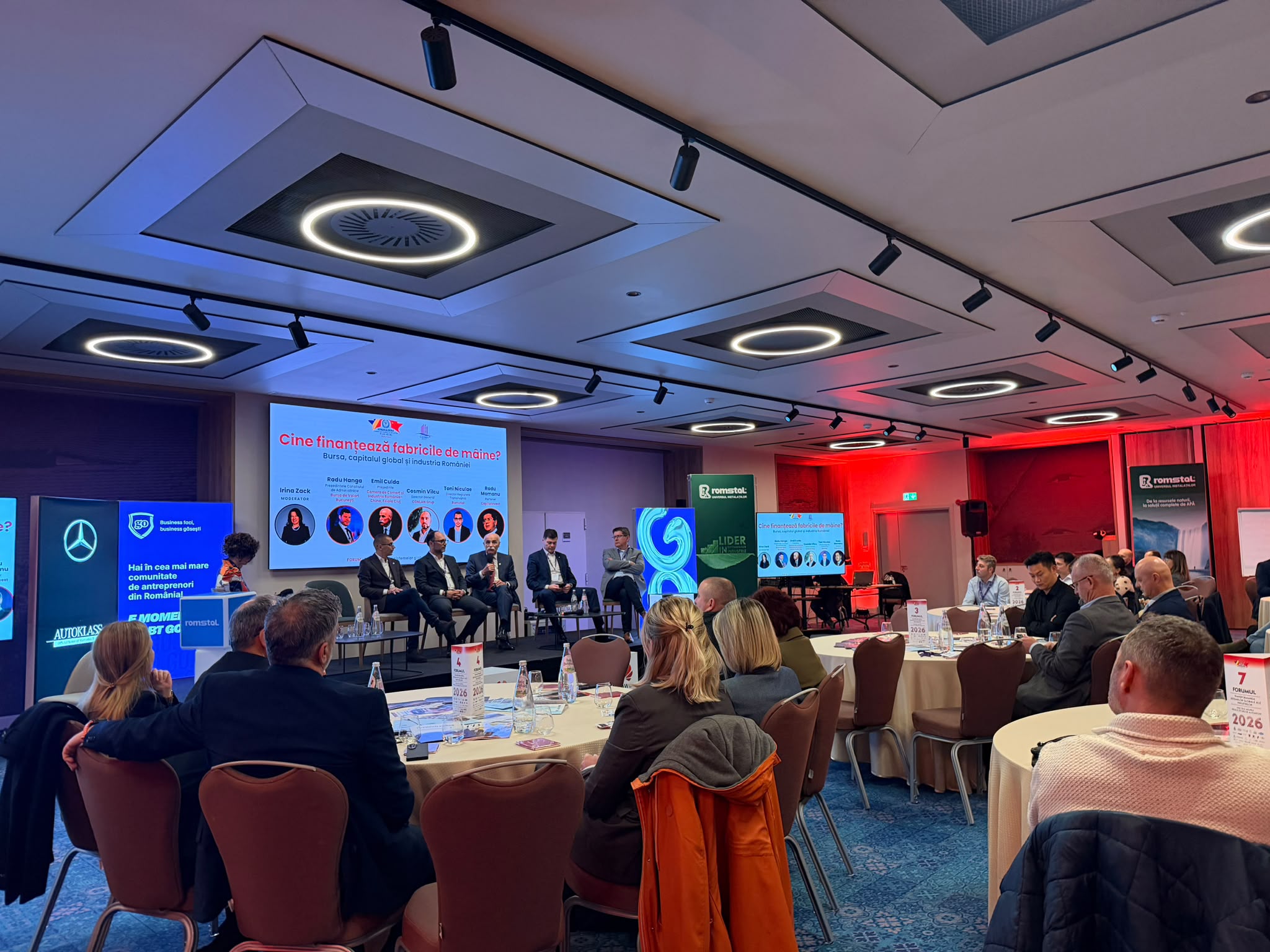
Iron across millennia 🇷🇴 Sibiu FORUM 🇨🇳 From the Origins of Europe to the Civilizational Infrastructure of Artificial Intelligence. At the Romania–China forum in Sibiu, a proposal for a data and AI Campus in Aninoasa brought two questions into the same conversation. What could the Jiu Valley build after coal, and what could researchers and educators build with Europe’s digitized heritage? On November 19, 2026, Sibiu hosted the forum “The Transformation of Global Industrial Systems: Implications for Domestic Manufacturers.” It brought together representatives of industry, technology, capital markets, and Romanian–Chinese business organizations.
The participation of Huawei and UNRIVALS opened a discussion about Romania’s role in the data economy and the potential of post-industrial regions to host new technology infrastructure. For EUROPE GENESYS, the discussion connected with a question at the heart of the project. How can the archaeological record of Old Europe become a resource for research, education and new digital experiences?
Explore Aninoasa
Municipality’s 🇷🇴
proposal to the 🀄
Chinese Embassy 🇨🇳
Neutral 🇨🇭
AI GATE 🇪🇺
From coal to cloud in the Jiu Valley. The Jiu Valley was once one of Romania’s major industrial energy centers. Coal mining shaped Aninoasa’s economy and identity. The proposal presented through the Ținutul Momârlanilor platform explored what a new chapter could look like for the town. It envisioned a campus of approximately 100 hectares dedicated to data centers and artificial intelligence. The €100 million figure was an indicative investment amount for the proposed first stage.
Huawei and Aninoasa’s AI Campus. Following the Romania–China forum in Sibiu, Daniel Roșca of UNRIVALS shared a proposal with Vlad Doicaru of Huawei to explore a research pilot in Aninoasa. The pilot would bring together two questions: how AI can help researchers identify patterns in Neolithic ceramics, and how efficiently a data centre in the Jiu Valley could run that work.
The first use case would start with high-resolution images of Cucuteni and Yangshao pottery, linked to records of each object’s provenance, dating, and archaeological context. Computer vision could flag recurring forms and decorative motifs across the two collections. Archaeologists could then review those matches and assess what the similarities reveal about how the two cultures worked with clay.
Huawei’s proposed role would be to assess the computing, connectivity, and data interoperability requirements for the pilot. The team could also evaluate what the mountain setting could offer for data centre cooling and measure the energy used to train and run the models against a defined baseline.
For Huawei, this could become a European reference case for AI infrastructure applied to cultural heritage, with a specific research workload and measurable performance. For EUROPE GENESYS, it would provide a first use case for Civilizational Infrastructure as a Service, turning documented collections into a shared resource for researchers and educators in Romania and China. The proposal builds on the initiative that Aninoasa Municipality submitted to the Embassy of the People’s Republic of China in Romania in December 2025. It set out a vision for Aninoasa as a cultural and technological gateway connecting China with Europe.
From archaeological collections to structured knowledge. EUROPE GENESYS began with the Neolithic cultures of Old Europe, including Cucuteni, Vădastra, Hamangia, and Gumelnița. The project initially explored ways to bring their archaeological heritage into virtual environments, interactive experiences, and educational games. That work led to a broader question. What could researchers, educators, and developers do if digitized artifacts, their descriptions, and their archaeological context could be explored together?
Civilizational Infrastructure as a Service (CIaaS) is the EUROPE GENESYS proposal for organizing that knowledge so it can be used across research, education, and digital applications. A researcher could compare decorative motifs across collections. A teacher could build a lesson around objects from several sites. A developer could use the same material to create an interactive experience grounded in archaeological evidence.
Cucuteni and Yangshao as a starting point for cooperation. Certain forms and decorative motifs on Cucuteni and Yangshao pottery show striking visual parallels. These parallels invite comparative research into how Neolithic communities in present-day Romania and China expressed themselves through ceramics. A shared digital research project could bring together documented examples from both cultures. Researchers could compare forms, motifs, and techniques, with each object linked to its provenance and archaeological context. The same material could support cultural preservation, museum interpretation, and education in both countries.
Switzerland of Data 🇨🇭 is the proposed strategic positioning that connects this work to a wider ambition for Romania as a trusted environment for structured cultural knowledge, digital infrastructure, and AI applications.
What place branding can contribute to Aninoasa. A technology campus would require land, power, connectivity, investment, specialized talent, and international partnerships. The UNRIVALS Place Branding methodology explores how a territory’s identity can help give that economic development a direction rooted in the place itself. In this proposal, Ținutul Momârlanilor carries forward the Jiu Valley’s cultural identity, Hunedoara provides the territorial setting, and EUROPE GENESYS explores what can be built with digitized heritage. Aninoasa brings those strands together by giving the proposal a specific place and a history that explains why a new economic chapter matters. For EUROPE GENESYS, the Sibiu forum brought the location of future computing infrastructure into the same conversation as the knowledge it could help preserve, study, and share.
Iron across millennia, from Cucuteni and Yangshao to BYD Blade 比亚迪刀片电池. The resemblance between Cucuteni and Yangshao pottery goes deeper than the painted surface. Neolithic potters working thousands of kilometres apart used iron-bearing minerals to produce some of the colours that still distinguish their ceramics.
The clearest point of convergence is hematite (α‑Fe₂O₃), an iron oxide identified in red decorations from both traditions. In Cucuteni ceramics, X-ray fluorescence and synchrotron X-ray diffraction identified local hematite as the principal red pigment in the fragments examined. A separate Raman study of 50 Cucuteni A fragments found hematite and quartz in the red decoration.
The researchers interpreted the pigment as having been prepared from clay enriched in iron oxyhydroxides. Black decoration involved a different mineral palette. Across the two studies, researchers identified magnetite (Fe₃O₄) and jacobsite (MnFe₂O₄), a mineral containing both manganese and iron. On some Cucuteni vessels, iron-bearing minerals therefore contributed both to the red fields and to the dark motifs painted across them.
In Yangshao ceramics excavated near Taiyuan, in China’s Shanxi province, researchers analysed fragments dating to around 3000 BCE. They identified two forms of iron oxide in the red decoration, hematite (α‑Fe₂O₃) and maghemite (γ‑Fe₂O₃). Both have the formula Fe₂O₃, with different crystal structures. The black decorations varied across the samples. One group contained magnetite and jacobsite, minerals also documented in Cucuteni ceramics. Another contained hausmannite (Mn₃O₄), a manganese oxide.
The comparison thus reveals both a shared use of particular minerals and variation in how potters produced similar colours. That distinction gives the proposed Huawei research pilot in Aninoasa a specific task. High-resolution images could be linked to mineral analyses and archaeological records for each fragment. Computer vision could flag similarities in colour and motif, while researchers could use the material evidence to ask whether visually similar decorations were made using similar pigments. A black motif that looks almost identical in two photographs could lead to two different conclusions once its mineral composition is known.
Why iron matters to 🀄
BYD’s Timeless Power 🇨🇳
Iron has a different function in the BYD Blade Battery. In the ceramic fragments, iron-bearing minerals contributed to the colours that remain visible today. In Blade’s lithium iron phosphate cathode (LiFePO₄), iron takes part in the reversible reaction that stores and releases energy. As lithium leaves the cathode during charging, iron shifts from Fe²⁺ toward Fe³⁺. During discharge, lithium returns and the reaction reverses. BYD Europe describes the Blade Battery as designed for a lifespan exceeding 5,000 charge cycles.
CUCUTENI 🇷🇴 🤝🇨🇳 YANGSHAO 🀄 That material connection inspired Timeless Power, the positioning concept UNRIVALS presented in Sibiu. The ceramic fragments preserve the marks of their makers across millennia. The battery is engineered to deliver power across repeated cycles.
In Aninoasa 🇷🇴 the two strands could meet in a practical proposal. Huawei could assess the computing and connectivity needed to study the ceramics (Artificial Intelligence Infrastructure) while BYD’s LFP technology could be evaluated for energy storage and backup power at the proposed AI Campus.