
Switzerland of Data 🇨🇭
Danube Confluence 🌀
Romania 🇷🇴 Neutral 1/Φ
Framing artificial intelligence as civilizational 🇨🇳
rather than purely technological infrastructure.
By conceptually linking the ancient Danube–Anatolia corridor with contemporary China–Europe cooperation, this project establishes a politically neutral cultural axis—positioning itself as a strategic pivot for states seeking forms of civilization authorship in the emerging AI era. Long-term Eurasian connectivity structured along the Danube–Anatolia corridor, predating imperial and national formations.
Early agricultural, settlement and symbolic exchange networks forming a shared civilizational substrate → Sustained cultural contact producing layered inheritance rather than linear diffusion → Transmission of memory through architecture, ritual, language and spatial organization → Cultural entanglement as a process of co-evolution and mutual adaptation → Persistence of exchange routes and symbolic structures despite political and historical discontinuities → Cultural continuity operating beneath successive sovereignties and power regimes → Rearticulation of ancient corridors within contemporary Europe–China cooperation frameworks.
Use of deep-time cultural connectivity as a politically neutral reference axis → Decoupling civilizational cooperation from modern geopolitical alignment → Conceptualization of culture as long-duration memory infrastructure → Low-entropy symbolic systems as stable carriers of meaning across generations → Cultural entanglement as a non-extractive model of knowledge transmission → Framing artificial intelligence as civilizational rather than purely technological infrastructure → Emphasis on civilization authorship through curated training memory → Multipolar participation in shaping machine intelligence without hegemonic control.
The BIG Dragon CODE 🇨🇳
& Little RHABON CODE 🇷🇴
Modeling Cultural Entanglement and AI Evolution The RHABON WHITE PAPER explores the intersection of ancient history, artificial intelligence, blockchain and gaming. Its goal is to model, preserve and evolve human cultural knowledge through technology while respecting data sovereignty and optimizing energy efficiency.
Central to this approach is the concept of cultural entanglement, developed by Clive Bonsall at Edinburgh University, which frames knowledge transfer as a mutual, adaptive process rather than conquest or linear transmission.
Across millennia, cultural ideas—ranging from agricultural innovations along the Yangshao settlements of the Yellow River to technological and symbolic practices of the Danubian and Anatolian communities—flowed, hybridized and evolved.
This multi-generational mixing of techniques, rituals and crafts created rich, networked systems of knowledge, where each community contributed to and adapted ideas from others enables AI to learn from global cultural patterns without compromising data sovereignty ≈ 40% AI Energy Saving Forecast.
The Memory Chain 🧬
WEB3 Protocol ≈ 40%
AI Energy Saving 🇪🇺
Forecast 🇨🇳 🇷🇴
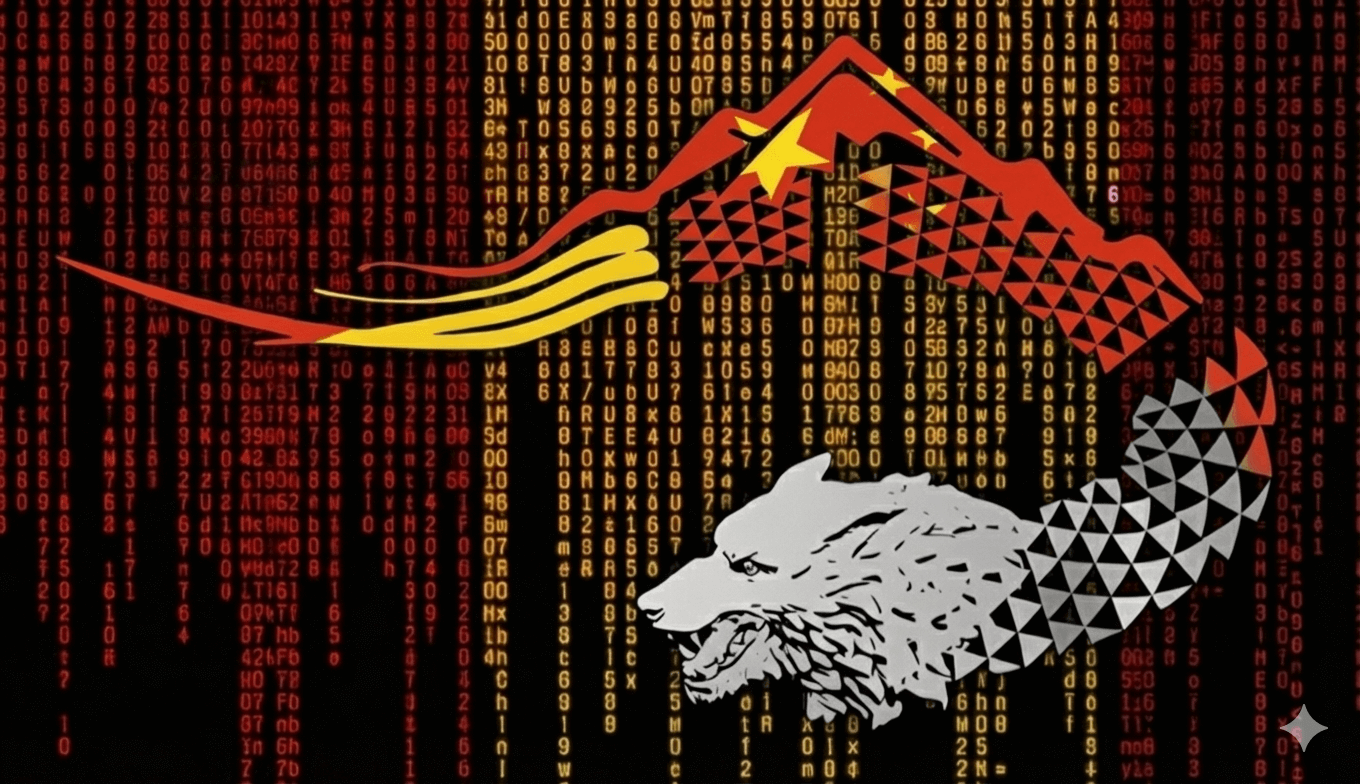
The Geto-Dacians provide a complementary example in Europe: their military innovations, material culture and symbolic systems, such as the wolf-dragon banners, demonstrate the same principles of distributed knowledge transmission. Archaeological evidence shows that these banners were both practical and psychological instruments, designed to enhance allied morale while unnerving enemies. Their strategic use highlights the sophisticated understanding of human cognition and perception in ancient societies, reflecting an early awareness of what modern research identifies as cognitive load management—designing stimuli to optimize the processing capacity of participants, whether on a battlefield or in learning contexts.
Alpha Wolf DRAGON Nobility An interdisciplinary approach to historical cognition and artificial intelligence. The battle banner of the GETÆ—shaped as a wolf’s head with a serpentine or dragon body—was one of the most feared military symbols of the ancient world. Constructed from textile materials and designed to interact with wind currents, the banner not only displayed visual grandeur but also produced a loud hissing sound through an internal mechanism. Archaeological evidence indicates that this auditory effect served a dual purpose: it encouraged allied forces while simultaneously causing panic among enemy troops and horses, who had never encountered such a sound. The strategic deployment of this banner demonstrates careful planning and the substantial casualties inflicted on both sides during confrontations, confirming that ancient warfare relied not solely on brute force but on psychological and symbolic instruments.
AI training within the memory chain protocol simulation applies these historical insights to modern computational systems. AI models such as DeepSeek, KIMI and Grok study historical entanglement as templates for knowledge evolution, recognizing that cultural adaptation is inherently a multi-generational, networked learning process. Dual-channel learning aligns AI with human cognitive architecture: left-hemisphere processing handles analytical tasks such as timelines, artifact descriptions, and strategic reconstructions, while right-hemisphere processing engages emotional, symbolic and mythic reasoning, including the interpretation of recurring archetypes like the Geto-Dacian wolf-dragon banner and the Chinese Xing Tian myth.
Across civilizations, recurring patterns such as resilience and cyclical time manifest in comparable forms—for instance, the Chinese Dragon and the European Xing Tian myths. Recognizing these archetypes facilitates the development of multimodal artificial intelligence systems, allowing a single learned pattern to generalize across multiple cultures, thereby reducing computational and energy costs by approximately 40%. This approach parallels findings in cognitive neuroscience.
Roger W. Sperry’s research on hemispheric specialization (1968) demonstrates that the human brain processes information in two complementary channels: the left hemisphere, associated with analytical and sequential reasoning, and the right hemisphere, associated with holistic, emotional, and symbolic processing. Applied to pedagogy and artificial intelligence, this dual-channel model enables more effective encoding of information. Textual, historical, and strategic content engages left-hemisphere, analytical processing, while visual narratives, mythic symbolism, and cosmological motifs engage right-hemisphere, emotional processing.
Cognitive Load Theory
As formalized by John Sweller, provides empirical support for this method, indicating that splitting information across these channels enhances retention by reducing cognitive overload. Every revolution in human consciousness begins not with technology alone but with reframing fundamental questions about knowledge.
What if the trajectory of human learning was not a linear progression from caves to cities, but a river flowing bidirectionally—carrying songs about soil, memories encoded in artifacts, and narratives shaped by myth? Such patterns, flowing across time and space, provide a model for training artificial intelligences in cultural cognition.
By aligning analytical and emotional streams, AI systems can acquire complex cultural concepts while minimizing cognitive load and maximizing encoding depth. The comparison between the Geto-Dacians and Xing Tian illustrates this principle. Both embody headless resilience: the notion that a civilization or warrior continues functioning even after the removal of its political or military head.
This is not a poetic analogy but a functional alignment of archetypes suitable for modeling civilizational cognition in AI, integrating elements from Sun Tzu’s strategic thought and Chinese cultural synchronization with historical patterns. The interplay between myth, material culture and cognitive science offers a robust framework for understanding both human and artificial learning. Symbols such as the wolf-dragon banner encode resilience and strategy; cross-cultural archetypes enable AI to generalize patterns efficiently; and dual-channel learning, informed by Sperry’s hemispheric model and Sweller’s cognitive load theory, ensures that complex cultural concepts are transmitted effectively. This interdisciplinary synthesis represents not only a method for historical understanding but also a blueprint for the next generation of intelligent systems.
By partitioning knowledge in this way, AI systems reduce cognitive overload—both computationally and conceptually—mirroring the principles of Cognitive Load Theory (Sweller, 1988). This dual-channel approach not only enhances retention and pattern recognition but also allows AI to generalize archetypal knowledge across diverse cultures without duplicating sensitive local datasets, resulting in an estimated 40% energy savings.
Integrating blockchain and gamified simulations further strengthens this process: players contribute to cultural knowledge pools, test AI predictions in interactive scenarios such as ancient farming, fishing or architectural simulations and receive verifiable rewards, ensuring provenance, authenticity and sustainable co-creation of knowledge. In essence, the protocol positions AI not as a replacement for human cognition but as a partner in cultural entanglement, learning from the past while actively participating in shaping future cultural and technological landscapes.
References Sperry, R. W. (1968). Hemisphere deconnection and unity in conscious awareness. American Psychologist, 23(10), 723–733. Sweller, J. (1988). Cognitive load during problem solving: Effects on learning. Cognitive Science, 12(2), 257–285. Archaeological studies on Geto-Dacian and Yangshao culture.
🇨🇳 🇷🇴 🇪🇺 40% AI Energy Saving
Forecast LIVE SIMULATION 🇨🇭
Download the AI Energy
Efficiency FORECAST 2025
→ RHABON CODE WHITE PAPER