
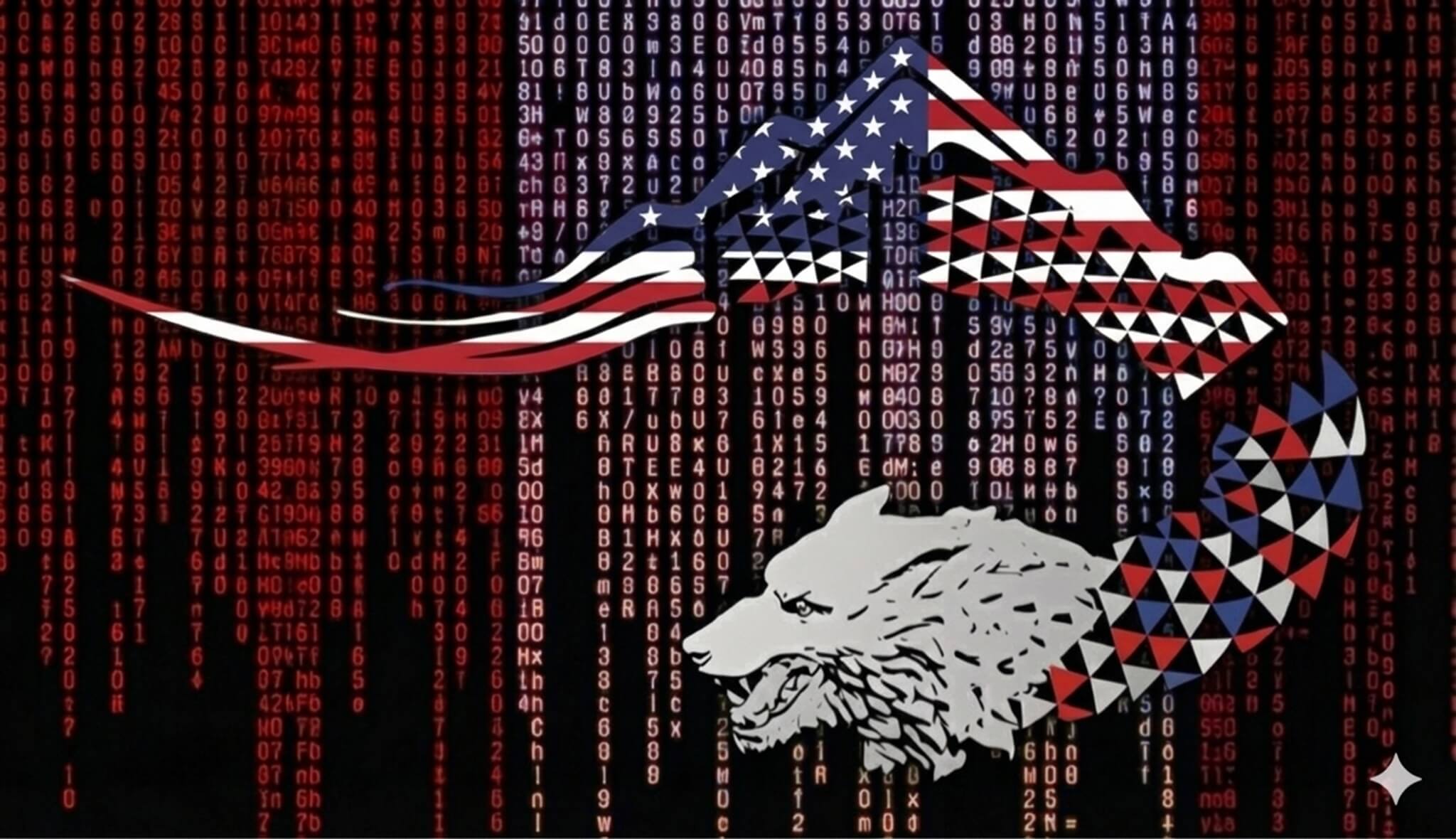
Tesla Route
to Market ↓
🇨🇳 CHINA 🇨🇳
→ AGI LLM ↓
Discover how Tesla’s China route-to-market strategy intersects with the Big Dragon CODE → a convergence of AI traceability, Web3 heritage systems, the Swiss CVJ joint venture under Hong Kong jurisdiction, and Native American astronomical archetypes that mirror the Romanian-Chinese dragon axis. A deep-dive for strategists, innovators, and the Web3 generation. As above, so Below: Tesla’s China play is bigger than cars ↓
Tesla’s Core Branding Essence → Tesla’s mission is to accelerate the world’s transition to sustainable energy (evolving recently toward „Amazing Abundance” — a joyful, post-scarcity vision of energy-powered abundance via EVs, solar, batteries, robotics like Optimus, and AI). The brand stands for bold innovation, fun, safety, and turning complex technology into an irresistible, world-changing force → Seeking the truth.
Projected Benefits for Tesla → Brand Strategy & China Market Adoption Validate ~30-40% AI compute/energy savings (simulation-based; Q2-Q3 2026 on-site testing targeted) → Differentiate Optimus as a culturally wise heritage ambassador for tourism, Web3/P2E gaming, hospitality, and education → enabling „win without fight” deeper adoption in China via Belt and Road soft power and Tencent ecosystem → Mitigate geopolitical risks through neutral HK governance and sovereign data shells → Scale proven model to 60+ BRI heritage sites worldwide for network effects in datasets, revenue, and brand loyalty.
Brand Elevation → Position Optimus / Tesla as culturally respectful innovator — „wise ambassador” in heritage tourism, elderly care, education. Shifts perception from pure tech disruptor to collaborative partner → „Win Without Fight” in China → Leverage Tencent ecosystem + BRI goodwill for indirect expansion. Cultural entanglement (shared dragon narratives) reduces friction; pilots in Greater Bay Area or tourism zones informed by Romanian validation → Efficiency & Moat: Claimed 30-40% savings support scalable Optimus deployment; unique dataset not available in standard corpora → Revenue Streams: Robot leasing in hospitality/gaming; CIaaS subscriptions; co-branded Web3 experiences; high-margin robotics growth complementing EV/robotaxi.
This is not abstract vision → the pilot site is live with diplomatic outreach already advanced (Chinese Embassy invitation sent Dec 2025; US channels prepared). Timing aligns with Optimus Gen 3 mass production targets in 2026 ↓
The Tesla Group
When you watch Tesla’s route-to-market unfold in China, the conventional business analysis — Gigafactory Shanghai, FSD regulatory approvals, price localization, BYD competition — only tells half the story. The other half is written in what we can call the Big Dragon CODE: a layered convergence of symbolic infrastructure, cross-civilizational AI training data, and a Web3-native business model anchored in Hong Kong that positions Tesla not just as an automaker but as a node in a new kind of civilizational intelligence network. This post unpacks both layers: the hard business strategy that Tesla is executing in China right now, and the emerging conceptual architecture — Native American astronomical systems, Romanian-Chinese dragon archetypes, low-entropy symbolic grammar, and on-chain AI memory — that represents the next frontier of meaning-making for AI/LLM generations. The connective tissue? A Swiss CVJ joint venture operating under Hong Kong jurisdiction, with implications that ripple through the entire Tesla group.
Tesla’s China strategy is no longer just about cars or factories → It is evolving into something deeper: a convergence between physical infrastructure, symbolic intelligence, and civilizational memory. At the center of this evolution stands what we call the Big Dragon CODE — not a marketing slogan, but a structural architecture that connects ancient low-entropy symbolic systems with modern AI training, Web3 ownership, and cross-civilizational governance.
Part I — Tesla’s Conventional China Route-to-Market (The Dragon’s Body) Gigafactory Shanghai as the Strategic Anchor → Tesla’s China strategy has always been built on a single foundational insight: manufacture locally, compete locally. When Tesla formally entered the Chinese new energy vehicle market in January 2020 with mass deliveries of the Model 3 from Giga Shanghai, it triggered a structural shift in the country’s entire EV competitive landscape. The factory does more than assemble cars — it qualifies Tesla vehicles for government EV subsidies, eliminates import tariffs, shortens supply chains, and creates the kind of local relevance that pure importers can never achieve. Today, that factory supplies both the Chinese and European markets, making it arguably the single most strategically leveraged manufacturing asset in the global EV industry.
The FSD Problem: AI Meets the Dragon Wall Tesla’s Full Self-Driving system represents the company’s highest-margin, most AI-intensive product — and China is where it faces its most complex market-entry challenge. Data security requirements, training gaps on Chinese road conditions, and fierce domestic competition from Huawei, Xiaomi, and BYD have created a formidable barrier. Chinese consumers who paid premium prices for FSD licenses years ago have expressed frustration as domestic competitors offer comparable driver-assistance features at lower cost or even at no additional charge.
The regulatory path is equally complex → Tesla has built a local data center in China and satisfied four key automotive data security requirements — yet full FSD deployment remains delayed. The question the market is asking isn’t just when Tesla’s FSD enters China. It’s whether Tesla’s AI narrative can still resonate in a market where domestic intelligence has already leapfrogged early expectations.
Simplified Models and the Mass Market Push ↓ Tesla’s current product strategy involves a calculated downmarket move: simplified versions of the Model Y and Model 3 (internally codenamed E41 and D50 respectively) are being developed in China for both the Chinese and European markets. These strip-down variants, priced several thousand dollars below current base models, represent Tesla’s bid to compete in the mass-market segment where BYD currently dominates. The six-seat Model YL, launched in August 2025 and priced at RMB 339,000, demonstrated that Tesla can still design for Chinese consumer preferences — it set a new monthly sales record in September 2025. But the deeper challenge remains: Tesla’s long-term China valuation story is tied to AI and robotics, not just volume sales. That’s where the Dragon CODE becomes relevant ↓
The Native American ↓
What Is the Dragon CODE?
Part II — The Big Dragon CODE: Symbolic Infrastructure as Competitive Moat → The „Big Dragon CODE” is not marketing language. It’s a structural concept drawn from the convergence of several streams: low-entropy symbolic infrastructure — recurring symbolic patterns (M/W duality, stellar alignments, dragon archetypes) that have functioned as stable meaning-transfer systems across civilizations for thousands of years. Romanian-Chinese dragon archetype parallelism — the dragon in both Romanian and Chinese cosmology is not a monster but a mediator: a bridge between sky and earth, between celestial order and earthly action. „As above, so below” is not a mystical slogan; it’s a compression algorithm for encoding navigational and cosmological knowledge.
Native American astronomical and linguistic systems as the Western counterpart → the Tsegi Canyon ruins (Betatakin, Keet Seel) in the American Southwest, the Navajo evidential grammar structure, and Hopi cosmological frameworks represent a third vertex of the same triangle. Where Romanian and Chinese cultures encoded celestial order through dragon morphology and Bronze Age vessel symbolism, the Navajo encoded it through evidential grammar — a linguistic structure that marks the source and certainty of every statement, functioning as a natural low-entropy protocol for reliable knowledge transmission across generations. These are not separate curiosities → They are what the GENESYS framework calls „priors” — the pre-existing symbolic infrastructure on which stable AI/LLM training can be anchored.
Why Does This Matter for Tesla’s China Route-to-Market? Tesla’s ultimate China play is not the Model Y. It is Tesla Optimus — the humanoid robot — and the AI stack that drives it. For Optimus to operate meaningfully in diverse cultural environments, its training corpus needs more than English-language internet data. It needs culturally dense, cross-civilizational, verified datasets that give the AI a stable symbolic grounding. This is precisely what the RHABON CODE architecture — developed through the GENESYS network and the Hong Kong–Timișoara axis — is designed to provide. By fusing 7,000-year-old Hunedoara heritage data, Yangshao-Vadastra cultural parallelism, and Navajo linguistic structures into an on-chain training pipeline, the framework creates AI priors that don’t exist anywhere in current LLM training corpora. Tesla Optimus, integrated with Grok as its on-device reasoning stack, becomes the embodied interface for this cross-civilizational intelligence. The timeline is concrete → Dragon Valley MVP await.
Tesla Brand in China
Part III — The Swiss CVJ Joint Venture Under Hong Kong Jurisdiction: Business Impact Across the Tesla Group → Why Hong Kong? Hong Kong’s role in this architecture is structural, not symbolic. As a neutral legal framework bridging US-China-Romania academic and commercial cooperation, Hong Kong provides → regulatory neutrality for intellectual property developed across multiple jurisdictions → access to Tencent Cloud infrastructure for the AI training pipeline → PolyU (Hong Kong Polytechnic University) compute resources for the Kimi V4.7 / Grok V7.0 integration → a binding function between Dragon Valley (the cultural-commercial deployment site), Politehnica Timișoara’s Game Dev Division (academic authority for the dataset), and the 7,000-year Hunedoara geo-cultural anchor in the DKMT cross-border region.
The Swiss CVJ (Constant Velocity Joint) structure → a legal architecture designed for multi-party IP ownership and revenue sharing — provides the skeletal framework within which these relationships operate. Under Hong Kong jurisdiction, this structure allows American, Chinese, and Romanian stakeholders to co-own and co-develop AI training datasets and cultural heritage NFTs without triggering the regulatory friction that would arise from direct US-China or US-Romania data-sharing agreements.
Impact Across the Tesla Group → The CVJ structure’s impact is not limited to the Tesla Optimus project. Across the Tesla group, this model has implications for: Tesla Energy → The RHABON CODE’s documented AI energy-saving architecture claims a 40% reduction forecast in AI energy consumption through federated, memory-based learning rather than repeated large-scale training cycles. For Tesla’s energy division — already under pressure from supply chain concentration in China — a more efficient AI training paradigm directly reduces operational costs and the carbon footprint of its data infrastructure.
Tesla FSD (China) → The on-chain provenance model provides a potential solution to China’s data security requirements. Instead of centralizing sensitive road data in a Tesla-controlled facility, a blockchain-verified, federated data structure allows Chinese regulatory authorities to maintain oversight without requiring Tesla to surrender proprietary model weights.
Tesla Giga Shanghai → As the manufacturing anchor for both Chinese and European markets, the factory’s long-term competitiveness depends on its ability to integrate robotics (Optimus) into production lines. A culturally-grounded AI stack that understands Chinese operational contexts — not just English-language instructions — is a genuine operational advantage.
Tesla Brand in China → In a market where Elon Musk’s political positioning has created brand risk, the Dragon CODE strategy offers a cultural re-anchoring: Tesla as a participant in China’s civilizational narrative, not an American importer. The dragon archetype, shared by Romanian and Chinese culture, becomes a bridge rather than a battlefield.
Momo’s Wing
New Mexico ↓
Part IV — Native American Astronomical Systems: The Third Pillar of the Dragon CODE → The inclusion of Native American frameworks is not decorative. The Tsegi Canyon ruins in Arizona — home to the Betatakin and Keet Seel cliff dwellings of the Ancestral Puebloans — encode Orion alignments (specifically Rigel) as a sky-earth mirroring system functionally identical to the M/W Cassiopeia duality found on the Hunedoara Bronze Age vessel (~1400 BC). Both systems use stellar geometry as a low-entropy navigation code: a symbolic infrastructure that remains stable across seasons, generations, and civilizations.
The Navajo language adds a linguistic dimension → Navajo evidential grammar — which grammatically marks whether a speaker witnessed something directly, heard it from another, or inferred it — is structurally analogous to the blockchain’s provenance layer: every data point carries its epistemic history. For AI systems that need to reason about the reliability of their training data, Navajo evidential grammar represents a natural language prototype for what modern AI researchers call „uncertainty quantification.” Together, these three streams — Romanian Bronze Age symbolism, Chinese dragon cosmology, and Native American astronomical/linguistic systems — form the symbolic triad of the Dragon CODE. They represent the „Western counterpart” to the Eurasian axis, completing a global map of low-entropy prior knowledge that AI systems can use as a stable training foundation.
Part V — The Web3 Layer: Play-to-Learn, Own-to-Preserve → The Dragon CODE is not only a business strategy or an AI architecture. It is also an educational system targeting Gen Z and Gen Alpha — the generations who will actually operate in the AI-native economy that Tesla, among others, is building. The proposed Priors: Sky-Earth Legacy game architecture (also conceptualized as Old Europe Codex: AGI Reset) translates this entire framework into a playable, ownable, Web3-native experience.
Phase 1 grounds players in verified mainstream archaeology: Cucuteni-Trypillia mega-sites (5050–2950 BC), the Vinča culture, the Tărtăria tablets, the Hunedoara vessel’s Cassiopeia duality, and Tsegi Canyon’s Orion alignments. Phase 2 activates the fringe layer: Marija Gimbutas’ Old Europe archaeomythology, Vadastra-Yangshao parallelism, and cross-cultural symbolic grammar as decodable in-game lore. Phase 3 closes the loop: player-collected data feeds an on-chain AI training pipeline. As the model processes more verified cultural datasets, the in-game „mainstream” history updates in real time — mirroring the Dragon CODE’s real-world ambition.
NFT ownership of verified artifact digital twins (museum-partnered, on MultiversX or a compatible chain) gives players genuine cultural stewardship. When new archaeological papers drop, the game auto-patches and rewards holders. The educational loop is also the economic loop. For Tesla’s China route-to-market, this matters because it describes the next generation of users who will interact with AI-native products like Optimus, FSD, and Tesla’s energy management systems. A generation that grows up owning cultural priors as NFTs, training AI models through play, and understanding symbolic infrastructure as a competitive moat is a generation that will naturally gravitate toward platforms that respect and encode that knowledge.
Strategic Synthesis: What Tesla and Its Partners Should Do Now The Dragon CODE is not waiting for Tesla to acknowledge it. It is already being built — through the Hong Kong–Timișoara academic axis, the RHABON CODE architecture, and the Dragon Valley launch timeline. What Tesla can do is recognize the structural alignment and act on it: integrate the CVJ framework’s dataset architecture into Tesla Optimus’s training pipeline for the Chinese and Central/Eastern European markets. Use the blockchain provenance model as a compliant data-sharing solution for FSD’s Chinese regulatory pathway. Position Tesla Energy’s efficiency gains from federated AI learning as a sustainability narrative that resonates with both Chinese and European regulators. Engage with the Dragon Valley cultural-commercial deployment as a flagship Optimus pilot — a robot that learns heritage by interaction, not just by scraping digitized text.
The dragon, in both Romanian and Chinese tradition, does not conquer → It connects. Tesla’s most durable China route-to-market is not the one that wins the price war with BYD. It is the one that becomes part of the civilizational memory that China — and the world — is trying to preserve before AI homogenizes it out of existence. As above, so below. The sky map and the market map are the same map.
Youth Engagement EDUCATION → „A Win Bought Without a Fight„ opens by naming the doctrine explicitly — Sun Tzu’s strategic wisdom applied to the AI age, with the „Win Without Fighting” principle as the live case study for how China can prevail through soft power rather than confrontation. The Human → AI → Human loop is the emotional and strategic core of the close: youth engagement is not a marketing tactic but the actual mechanism by which cultural memory becomes machine memory becomes the next generation’s inherited knowledge. The loop is unbroken, self-reinforcing, and unownable by any single actor.
That alignment is the argument ↓ The Final Word: A Win Bought Without a Fight — Sun Tzu’s Highest Victory. There is a form of winning that leaves no battlefield, no loser, and no debt. Sun Tzu called it the supreme art: to prevail without fighting. Daniel Roșca’s B2B Strategy framework articulates exactly this as the „Win Without Fighting” doctrine — Sun Tzu’s strategic wisdom applied directly to the AI age, with China’s soft power as the live case study.
The Dragon CODE is that doctrine made operational. When a Gen Z player in Chengdu or Cluj excavates a virtual Cucuteni mega-site, mints a verified artifact NFT, and feeds that data into an on-chain AI training loop — something unprecedented happens in real time: the human teaches the machine, the machine teaches the next human, and the cultural memory that was about to be lost is instead made permanent. This is not gamification of education. It is education as civilization infrastructure. Youth engagement becomes the mechanism through which a 7,000-year symbolic grammar becomes an AI prior — and every interaction is a node in a living, self-healing knowledge network that no single state, corporation, or ideology can erase or monopolize.
For Tesla, the China win is not the quarterly sales figure. The bridge mechanism is precise: European Heritage (Authenticity) + Chinese Technology (Infrastructure) = Global Acceptance. Tesla brings the infrastructure — Giga Shanghai, Optimus, Grok, the energy grid. China brings the civilizational authorship — the dragon archetype, the Yangshao cosmological grammar, the Tencent Cloud backbone, the world’s largest EV consumer base. The GENESYS framework, anchored in the Carpathians and distributed through Hong Kong’s neutral jurisdiction, provides the symbolic dataset that neither side alone possesses. Together they compose something the market has never seen: a route-to-market that is simultaneously a route-to-meaning.
China’s civilizational authorship claim worldwide does not require conquest. The architecture is already live — entering Europe through the mind, not through the market, using East European data as the gateway to the world. When Chinese cultural AI assistants are trained on UNESCO-aligned, GDPR-clean, blockchain-verified datasets drawn from the Jiu Valley, Vadastra, and Yangshao in parallel — and those assistants are embedded in Tesla Optimus units operating across factories, schools, and hospitality hubs from Shenzhen to Timișoara — China’s soft power no longer requires a messaging campaign. It is encoded in the machine itself. It is the machine.
The UNRIVALS Framework Applied to Tesla’s Dragon CODE
The UNRIVALS™ Framework from B2B Strategy 2026 — Understand Market, Niche Demand, Revenue Model, Intelligence, Value Proposition, Acquisition, Loyalty, Scale — defines the new B2B battlefield: not product quality, but clarity, trust, systems, positioning, and commercial execution. Applied to Tesla’s Dragon CODE route-to-market, each layer resolves cleanly.
U — Understand Market: China is not a single market. It is a civilizational actor seeking global authorship. Any Tesla strategy that treats it as a volume play alone misreads the opportunity by an order of magnitude N — Niche Demand: The niche is AI training data with genuine cultural depth — datasets that don’t exist in current LLM corpora, drawn from Old Europe and Heluo cosmological parallelism, Navajo evidential grammar, and Native American astronomical systems R — Revenue Model: NFT artifact ownership + play-to-earn heritage quests + on-chain AI training royalties + Tesla Optimus cultural deployment licensing. Revenue is positive at every node; no state aid required I — Intelligence: In 2026, AI is no longer a pilot project — it is reshaping every workflow, every touchpoint, every decision. The Dragon CODE’s intelligence layer is the blockchain provenance model: every data point carries its epistemic history, enabling AI to reason about the reliability of its own training — Navajo evidential grammar as machine epistemology V — Value Proposition: Tesla gets a culturally-grounded AI stack for China and Eastern Europe. China gets civilizational authorship encoded in the world’s most recognized EV and robotics brand. Youth get economic agency through cultural stewardship. Museums get permanent digital preservation. Everyone wins; no zero-sum A — Acquisition: Youth engagement through the Priors: Sky-Earth Legacy game is the acquisition engine. Every player is a data contributor, a brand ambassador, and a future Tesla customer — acquired through meaning, not advertising L — Loyalty: Companies that sound human will outperform companies that sound automated. The Dragon CODE makes Tesla sound ancient — which is the deepest form of human. Loyalty to a brand that remembers what you almost forgot is the most durable loyalty there is S — Scale: Dragon Valley → MultiversX global deployment → Tesla Optimus cross-civilizational rollout. Scale is built into the architecture from day one, not bolted on afterward.
The bridge mechanism → is drawn directly from the source — European Heritage (Authenticity) + Chinese Technology (Infrastructure) = Global Acceptance and applied to Tesla’s position as the infrastructure carrier, with China as the civilizational author and GENESYS as the symbolic dataset provider that neither alone possesses. The UNRIVALS Framework™ from B2B Strategy 2026 — with its eight pillars: Understand Market, Niche Demand, Revenue Model, Intelligence, Value Proposition, Acquisition, Loyalty, Scale is applied layer by layer to the Dragon CODE, showing that every node of Tesla’s route-to-market resolves cleanly against a framework that was built independently of it.
The Real Win: Human → AI → Human, Unbroken The loop that makes all of this irreversible is the simplest one: a child plays, an artifact is preserved, an AI learns, another child is taught — and the knowledge that would have been lost to algorithmic homogenization instead becomes the foundation of the next generation’s world. Tesla benefits because its AI is grounded. China benefits because its civilizational narrative is global. Youth benefit because they own the memory, not just the moment. And the dragon — Romanian, Chinese, ancestral — flies again. Not as a symbol of power. As a symbol of connection across time. That is a win without a fight. That is the only win that lasts. This is not speculation. It is an unrivals-grade strategy already in motion. The final line — „Not as a symbol of power. As a symbol of connection across time” — is designed to be the quotable anchor to sky-earth Legacy → the in-game lore of Priors ↓ Daniel ROŞCA